Building an Africa-led future for Open Research
Open Research in Africa is shifting from access to strategy
The conversation around Open Research in Africa is entering a new phase. What was once framed as a question of access to publications is now being redefined as something far more strategic: a pathway to strengthening research systems, building equitable knowledge infrastructures, and positioning science, technology and innovation at the centre of the continent’s development. At its core, Open Research refers to approaches that make research more transparent and its outputs more accessible and reusable.
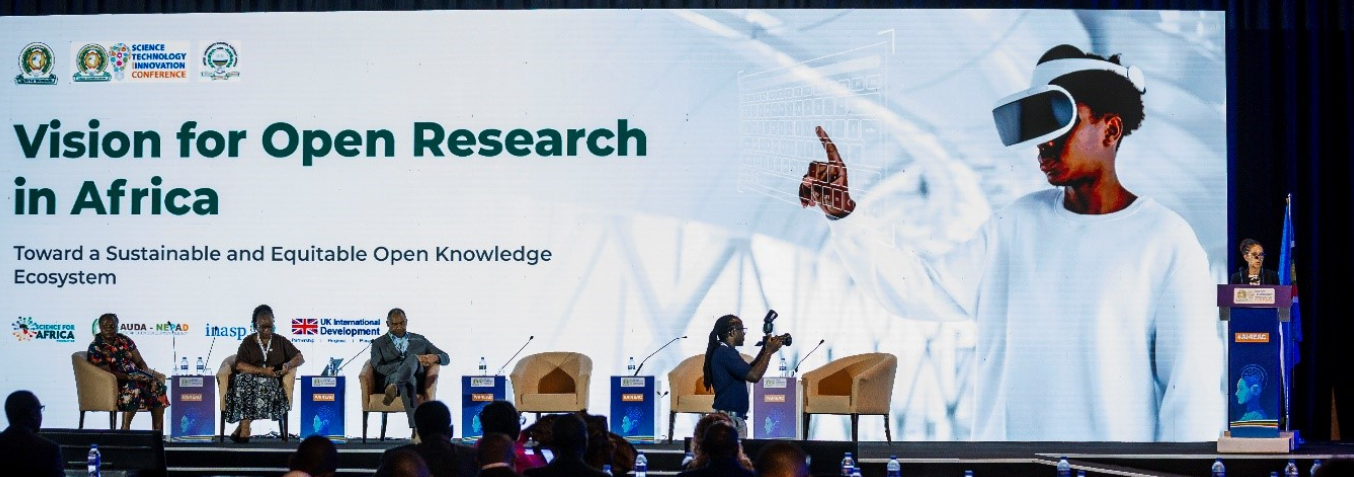
This shift was visible at the 4th EAC Regional Science, Technology and Innovation Conference in Kigali, where the Vision for Open Research in Africa was presented during a high-level side event alongside broader continental science and innovation discussions. For INASP, this moment marked an important milestone. We have been supporting the Science for Africa Foundation in shaping this vision, and it is encouraging to see it now gaining traction within continental processes, particularly through the emerging collaboration with the African Union Development Agency (AUDA-NEPAD) and its contribution to delivering the ambitions of the African Union’s Science, Technology and Innovation Strategy for Africa 2034 (STISA-2034).
The Kigali discussions made clear that Open Research is no longer a niche agenda, but part of the infrastructure required for Africa’s long-term development.
From access to agency: shaping Africa’s research future
At the centre of the discussion was one unifying idea: Africa must move from access to agency. This means going beyond access to global knowledge to building the systems, governance, partnerships and capabilities that enable African institutions to generate, steward and apply knowledge on their own terms—shifting from participation in global systems to shaping them.
In practical terms, this includes strengthening African-owned publishing platforms, developing interoperable data systems, investing in digital research infrastructure, improving visibility and discoverability of African research, and establishing governance frameworks that support ethical, inclusive and responsible research practices. It also requires stronger collaboration across countries and institutions, and a more deliberate effort to connect research to societal and economic priorities.
This vision for Open Research directly supports the ambitions of STISA-2034 which emphasises the role of science, technology and innovation in driving inclusive growth, digital transformation, industrialisation and resilience across the continent. STISA-2034 calls for stronger research systems, improved coordination, and better use of knowledge to inform policy and practice. Open Research plays a vital role in achieving these goals by making research more accessible, usable and responsive to African contexts.
Fragmentation, funding and coordination challenges persist
Africa’s research landscape remains fragmented, with uneven access to infrastructure, tools and platforms. Many institutions continue to rely on externally owned systems, limiting both visibility and control over knowledge. Intra-African collaboration remains relatively low, despite growing research capacity. Funding is a key factor shaping these dynamics, particularly in relation to research financing and shared infrastructure. While international partners remain important, there is increasing recognition that greater African investment is essential for building sustainable and coordinated research systems. In this context, the Science Granting Councils Initiative and national Science Granting Councils are emerging as critical actors in strengthening capacity, supporting collaboration, and enabling more strategic, Africa-led funding approaches.
At the same time, there is growing momentum to address these challenges, with new platforms emerging, stronger regional networks, and increasing recognition of the need for more coordinated, African-led and sustainably financed approaches.
From vision to implementation: the role of partnerships and policy processes
The Vision for Open Research in Africa provides a framework for bringing these strands together. It connects conversations on open access, data governance, digital infrastructure, research assessment, and science diplomacy into a more coherent agenda, shifting the focus from isolated interventions to long-term transformation.
For INASP, supporting this work has meant working in partnership with organisations across the ecosystem to help create the conditions for this agenda to emerge and evolve. This includes convening dialogue, contributing to strategic thinking, and helping to shape a pathway from concept to implementation. The next phase will require moving beyond vision-setting to more concrete programme development—clarifying priorities, identifying investable areas, and building the partnerships needed to deliver impact
This next phase will require sustained engagement within global and continental processes, including ongoing discussions under the STISA-2034 and the UNESCO Recommendations on Open Science, as well as emerging policy developments around digital public infrastructure, data governance, and research system reform. This includes contributing to thought leadership and ensuring the Open Research agenda remains relevant to funders, governments, and research institutions.
Positioning Open Research within Africa’s digital and innovation future
Partnerships will be central to this effort. While SFA Foundation and AUDA-NEPAD play key convening roles, there is a wider ecosystem to engage, including Science Granting Councils, African member states, regional bodies, universities, research institutions and international partners. Engagement with this ecosystem will be critical to ensuring that the vision translates into coordinated and sustainable action.
The conference discussions also situated Open Research within broader technological shifts, particularly the growing importance of artificial intelligence and digital public infrastructure. Open systems can support innovation, collaboration and visibility, but only if they are underpinned by appropriate governance and investment.
Without this, existing inequalities in global knowledge production risk being replicated in new digital environments. Ensuring African ownership, representation and stewardship of data and knowledge systems will therefore be essential.
Turning momentum into long-term impact
The opportunity now is to build on the momentum generated in Kigali and translate it into a clear and actionable programme of work. This includes developing concrete proposals, strengthening partnerships, and identifying funding pathways to support long-term implementation. It also means continuing to position this agenda as a core enabler of continental priorities such as STISA-2034 and Agenda 2063, ensuring that Open Research remains a core component of Africa’s science and innovation strategy.
INASP is proud to support this evolving agenda and to work alongside partners committed to strengthening research systems across Africa. As the Vision for Open Research continues to take shape, the focus must remain on delivering tangible benefits: more visible research, stronger institutions, greater collaboration, and ultimately, more impactful knowledge for Africa’s people—and for the world.
 Previous Post