
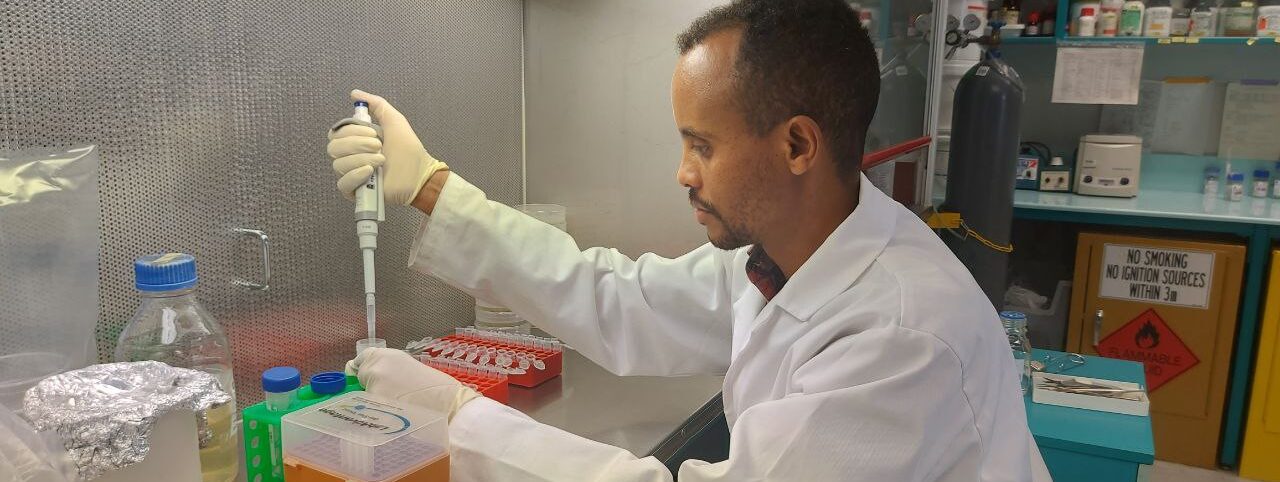
Enabling early career researchers to thrive and undertake valuable research
Researchers across Africa are ambitious, brimming with ideas and eager to make positive contributions to their communities and to a global scientific community. But the life of an early career researcher can be especially challenging. Early career researchers must build a research profile, secure research funding, and navigate the structures and cultures of their institutions and the expectations and demands of academic and professional communities. They must do all of this in research systems under acute strain, building careers in a context of limited resources, high teaching loads, and limited professional training and mentoring.
To strengthen essential capabilities and skills for researchers to progress their careers, we have joined forces with Jimma University and Mekelle University in Ethiopia and the University of Dodoma in Tanzania to scope and establish institutional development programmes for their early career researchers. These partnerships are part of INASP’s cooperation with Norad to provide additional support to researchers at African institutions involved in the NORHED II programme.
Supporting early career researchers to build a career – now and into the future
The future of research and research careers is changing and will need to change further to ensure that research can contribute to building economies and improving lives alongside meeting the demands of an uncertain and volatile world, shaped by technological shifts, climate change, rising inequality, demographic shifts and new pandemics. To ensure that we are equipping early career researchers with the skills they need to build their careers not only today, but importantly into the future as well, we came together to explore what a research career is likely to require in the future.
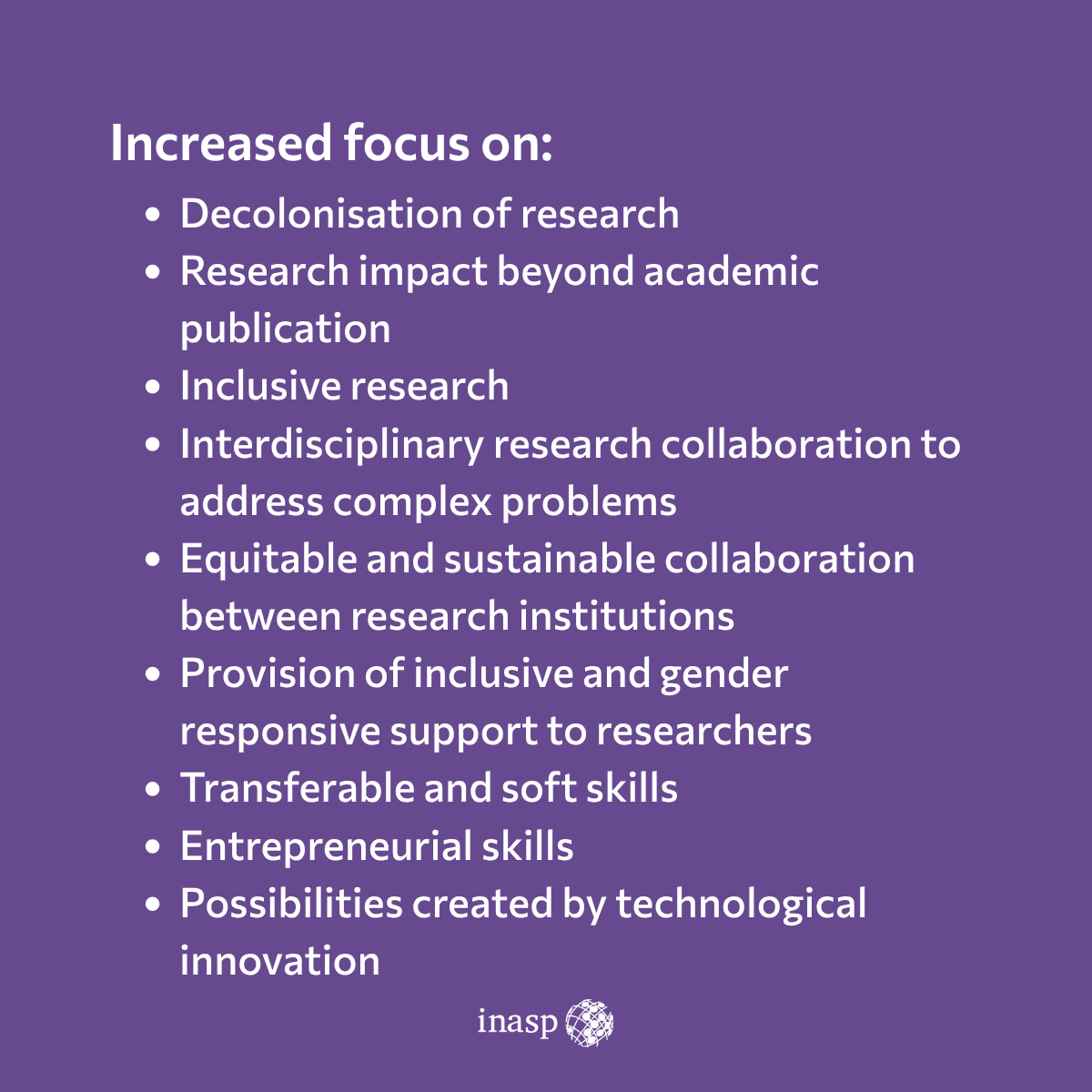
While the changing landscape of research and research careers comes with challenges, it also offers new opportunities for African researchers and universities to redefine and reshape what research means in an African context. We identified promising seeds – positive trends to build on to help shape better environments for early career researchers:
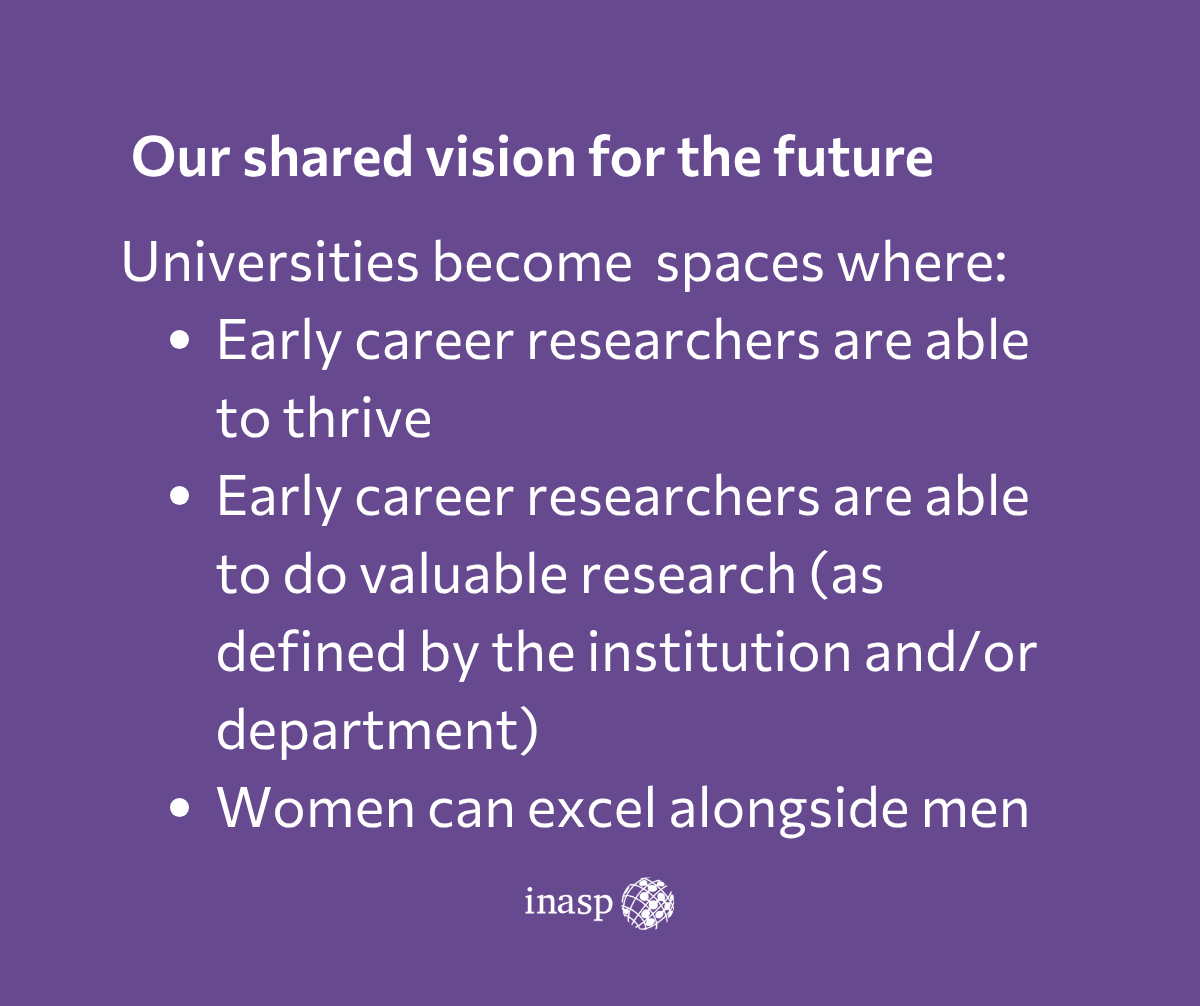
We condensed these positive trends into a shared overall vision for the future we are aiming to create for early career researchers through our partnerships:
Our partners identified the following as core pillars for the institutional development programmes we are working together to establish:
- Training for early career researchers in specific research related skills
- Development of institutional mentoring programmes
- Integration of gender considerations throughout all activities
- Integration of technology and AI considerations throughout all activities
Strengthening skills to secure funding
As all three universities identified grant proposal writing as the highest priority research skills area, this became our immediate focus of training. To date, working alongside colleagues from Jimma University, Mekelle University and the University of Dodoma, we have supported 126 researchers across the three institutions to strengthen their skills and confidence in writing grant proposals to fund their research. Several of these researchers have had grant success with institutional, European and international funders following the training.
“Successful grant writing is not just about writing… It requires a strong teamwork, a clear strategy, and effective use of limited resources. It’s not about making a friendship; it’s about formulating the right person for the right duties.”
Tigist Tajebe Wakjira, Jimma University
Local champions
To ensure that our partners can deliver ongoing grant proposal writing training, we have also trained 56 researchers to become expert facilitators. These facilitators have now started to deliver grant proposal writing training for colleagues at their institutions.
“A notable strength of the partnership is the emphasis on sustainability through the Training of Trainers (ToT) model. This has enabled UDOM to begin internalising capacity-building efforts, with trained participants now contributing as facilitators and supporting peers within their respective units. The collaboration has also fostered a growing community of practice among early career researchers, enhancing peer learning, information sharing, and collaboration.”
Dr. Godwin Myovella, University of Dodoma
Strong foundations
We have laid strong foundations during the first year of our partnerships with the three universities. Over the coming years, we will continue to work alongside our colleagues at Jimma, Mekelle and Dodoma so they can realise their institutional ambitions for research and for their communities.
“Over the past year, the partnership [with INASP] has supported Jimma University in systematically mapping the training needs of our early-career researchers. These needs were prioritized and translated into a structured plan, which was implemented in 2025 and is continuing in 2026. […] the partnership has established a sustainable and continuous capacity-building platform for Jimma University’s early-career researchers, which we expect will continue to yield benefits in this year and years ahead.”
Dr. Habtewold Deti Waktola, Jimma University
Title image: Bogale Abebe Gebeyo, Ethiopia, Agriculture and food systems researcher
 Previous Post
 Next Post




INASP is tranforming the research ecosystem in very significant ways, investing where it matters and having real and long-lasting impact.